
In the Greater Philadelphia area, residential sewer systems face unique challenges that most modern suburbs don’t encounter. Many of our historic neighborhoods—from the colonial row homes of Old City to the sprawling estates in the Main Line—still rely on original clay or cast iron pipes that are several decades, or even a century, old.
Understanding how these aging systems work isn’t just for plumbers; it’s the first step for any homeowner in avoiding costly emergency repairs. If you are already experiencing issues, it is often wise to schedule a professional service before a minor clog becomes a structural failure.
The Heritage of Philadelphia’s Underground Infrastructure
Philadelphia is a city of history, but that history includes underground infrastructure that is reaching its expiration date.
- Clay Pipes: Common in homes built before 1950, these are durable but brittle. Their joints are the “weak point” where the earth’s movement and nature’s persistence meet.
- Cast Iron: These pipes are prone to “scaling” (internal rusting), which catches debris like hair and grease, narrowing the pipe’s diameter over time.
According to Phila.gov Water Department guidelines, homeowners are responsible for the lateral sewer line from the house to the city main. This means a collapse under the sidewalk is your responsibility, not the city’s.
Common Threats to Local Sewer Lines: The “Philly Factors”
The infrastructure in the Greater Philadelphia region is susceptible to specific geological and biological threats.
1. Tree Root Intrusion: The Silent Invader
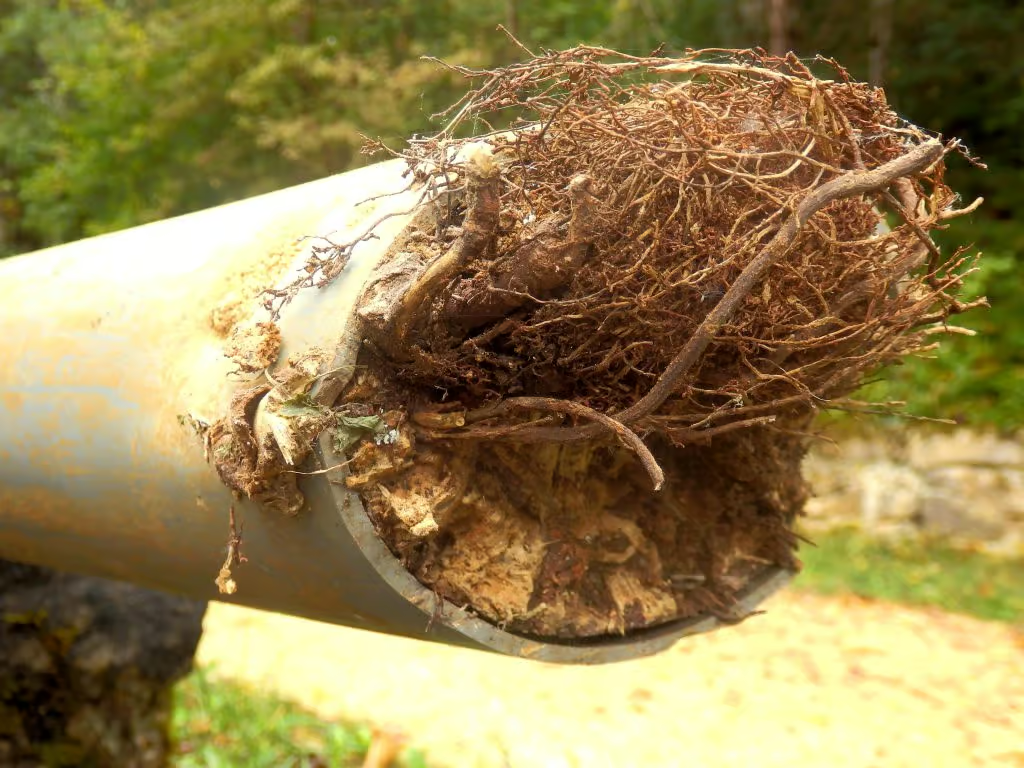
Roots from large, older trees (like the massive Maples and Oaks found in Chestnut Hill or Media) are naturally drawn to the moisture inside sewer joints. Even a microscopic crack allows vapor to escape, acting as a beacon for roots.
- The Process: Once inside, roots grow rapidly, acting like a net that catches everything you flush.
- The Risk: Over time, they can bridge the gaps in clay pipes, causing massive blockages and eventually “bursting” the pipe from the inside out.
2. Structural Sagging (Bellies)
As the ground shifts over decades—often due to the freeze-thaw cycles typical of Pennsylvania winters—sections of a pipe can sag. This creates a “belly.”
- In a belly, standing water sits permanently. Debris and grease accumulate here because the natural gravity flow is lost.
- If you notice recurring clogs, you might have a belly that requires more than just a simple snake. You can contact an expert for a diagnostic to confirm this.
Further Reading: Main Line Sewer Backup Signs: The Silent Flood Threatening Your Greater Philadelphia Home
Prevention vs. Repair: Why Maintenance Wins
Regular maintenance is far more cost-effective than emergency excavation. In a city like Philly, where many sewer lines run under concrete porches or expensive landscaping, “digging it up” should be the absolute last resort.
Modern Diagnostic Techniques
Techniques utilized by Insta Drain & Sewer LLC allow homeowners to see the interior condition of their pipes without a single shovel hitting the dirt.
- HD Sewer Camera Inspections: A fiber-optic camera is fed through your “cleanout” to map the pipe’s interior.
- Hydro-Jetting: By identifying a small crack or a minor root problem early, you can often solve the issue with high-pressure water cleaning rather than a full line replacement.
Expert Note: According to the Environmental Protection Agency (EPA), proactive sewer maintenance can extend the life of your lateral line by up to 20 years.
Best Practices for Philadelphia Homeowners
To protect your main line and keep your basement dry, follow these professional “Golden Rules”:
- Beware of “Flushable” Wipes: Despite the labels, these do not break down like toilet paper. In older Philly pipes, they act like bricks, building a wall that leads to a backup.
- Grease Management: Never pour cooking oil down the sink. In cold weather, it solidifies instantly in your cast iron pipes.
- Recognize the Warning Signs: * Gurgling sounds in your toilets or drains.
- Slow drainage in the lowest point of the house (usually the basement utility sink).
- Sewage smells near your front yard or basement.
If you recognize any of these, don’t wait for a total backup. It’s better to request a quote now than to deal with a flooded basement at 3 AM.
Conclusion: Securing Your Home’s Foundation
Your sewer line is the most important “invisible” part of your home. In a region with the history and climate of Greater Philadelphia, being proactive isn’t just a suggestion—it’s a necessity for protecting your property value.
Companies like Insta Drain & Sewer LLC recommend a professional inspection every few years. This ensures the structural integrity of your connection to the municipal sewer system and gives you peace of mind during the next heavy Pennsylvania rainstorm.